


Summer notes from the Commons
The summer of 2026 will be remembered for its series of heat waves and lack of rain creating flash drought conditions. Our area did, however, start the summer with a couple of cool cloudy weeks at the beginning of June and generally although hot our summer months were a few degrees cooler than the south of England. The sunny dry conditions were generally good for many butterflies but many other insects such as flies and bees found the heat difficult and as the summer progressed there were reports of birds starving, especially birds of prey as the heat prevented them from hunting. The following report features some of the highlights over the summer months of June, July and August.
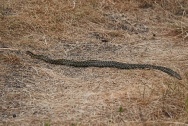
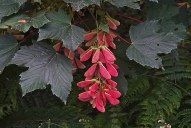
This year will be a Painted Lady year ie when there is a marked influx of these migrant butterflies. Over a dozen were present along with a Black-tailed skimmer dragonfly (01 Jun) and both Reed Warbler and Lesser Whitethroat were in full song. A visit to the Dew Pond, north of the AI49, found three Smooth Newts and a Water Stick Insect in residence (02 Jun). A pair of Red-legged Partridges that had been seen in May had successfully bred as 10 chicks were seen (05 Jun). An unusual visitor nowadays but a former breeding bird in the 1960s/70s, was a Grasshopper Warbler (10 Jun). It gets its name from its distinctive ‘reeling’ song. A crossbill was reported flying east by Russell Page (12 Jun). Some Sycamore seeds were showing a bright pink colour (13 Jun), which is due to an increase in the production of red pigments within the plant cells. The red pigments are produced in hot and sunny weather for UV protection. A large female Grass Snake was seen basking in the open (14 Jun) and a Latticed Heath moth was disturbed from the grassland. Up to three Red Kites passed over the Common (18 Jun) and two Norfolk Hawker dragonflies were seen at the main pond. A Dusky Cockroach was also present by the side of the central marsh, a location close to where the first recorded sighting in 2025 was. It is possible that this formally southern counties insect is now breeding on the SSSI. A Norfolk colony established a few years ago on Buxton Heath. Three Purple Hairstreak butterflies were noted flying around the canopy of an oak (19 Jun), which is at least three weeks earlier than normal. The early emergence of many butterfly species seems to be the norm this year. A male Banded Demoiselle was also seen plus another sighting of Dusky Cockroach. The first Marsh Fragrant Orchids started to appear (23 Jun), however, the marshes are beginning to dry as the temperatures rise in another heatwave. Mark Clements reported two White-letter Hairstreaks from a new Wych Elm site, also a White Admiral and a Humming-bird Hawk-moth (24 Jun). A Marsh Tit was also present, which was the first record of this species on the Common for around two years. There seems to be a decline in this species throughout north Norfolk recently. The first Silver-washed Fritillaries for the year were noted (26 Jun) as was the Southern Hawker dragonfly. Some Gorse bushes were showing dense webs which are produced by thousands of tiny Gorse Spider Mites (27 Jun). These infestations are more visible in dry sunny weather. The first Purple Emperor, a female, was observed entering a Sallow at the southern end of the central marsh (29 Jun).
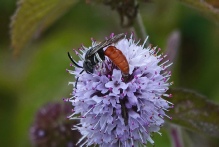
A Firecrest was present (01 Jul) and the Small Red-eyed Damselflies were noted from the main pond. Mark Clements spotted the second Large Tortoiseshell butterfly for the year, which turned up at a sap run (03 Jul) that later in the day also had two Purple Emperor butterflies visiting. Sap runs are actively sought by butterflies as they are a source of sugars, amino acids and minerals. As the sap oozes it can ferment on exposure to the air creating strong scents as the sugars convert to alcohols, which is highly attractive to many butterflies. The following day (04 Jul) some 23 species of butterfly were recorded, which is the most recorded in a single day for the SSSI. An early sighting of a Willow Emerald occurred (08 Jul) plus two Brown Hawkers and a Humming-bird Hawk-moth were also noted. While leading a group of West Runton Beavers on a ‘Bug Hunt’ a juvenile Oak Bush-cricket was found (09 Jul). These crickets are generally not seen and are largely silent. Males do make low drumming sounds by tapping their feet on a leaf. During a guided walk for the Norfolk Wildlife Trust (15 Jul) Bog Bush-crickets were found. These crickets are scarce and require specialised habitats such as lowland bogs and wet heathlands to survive. A woodland hoverfly with the common descriptive name, Golden-tailed Leafwalker, was found (20 Jul) and two juvenile Whitethroats were also seen. Marc Moody reported a Giant Blood Bee (25 Jul), which is the second year that this recent immigrant has been recorded. It was first recorded in Suffolk in 2020 and has since spread rapidly. The bee is a parasite on the Early Mining Bee. A new bug for the site turned up (26 Jul) which is known as the Rhombic Leather Bug due to its distinctive shape. Female Pantaloon Bees were also seen, again a common descriptive name, which refers to the large pollen brushes on the hind legs. A large female Adder was seen crossing a path about 4pm on a hot day (28 Jul) and a horsefly rescued from the Dew Pond turned out to be the rare Saltmarsh Horsefly, which is generally restricted to saltmarshes.
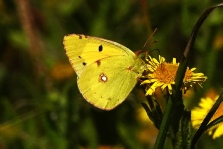
A pair of Kite-tailed Robberflies and a Sparrowhawk was noted (03 Aug). The following day (04 Aug) a Red Bartsia Bee and a second Giant Blood Bee were present. The year is turning out to be a great butterfly year and the 31st species to be recorded on the SSSI turned up (08 Aug). It was a Clouded Yellow, an immigrant but one that breeds in the UK in favourable conditions. There have been reports of hundreds being seen across southern counties this year. Mike Stevenson reported Otters (I adult/2 juveniles) in his garden pond at Caxton Park (09 Aug), which is on the east side of the Common. Two Clouded Yellows were seen (11 Aug) and a Hobby passed east and a Curlew headed west (12 Aug). Another Giant Blood Bee turned up (18 Aug) and a Dor Beetle was seen (21 Aug). A ‘fall’ of migrants along the north Norfolk coast (26 Aug) included flycatchers and a Wryneck at West Runton, however, on the Common only Willow Warblers were noted. John Hurst found a Spotted Flycatcher and another Willow Warbler (28 Aug). A Tortoise Beetle (Cassida vibex) was found on vegetation by the main pond and a female Large Sharp-tailed Bee was also seen (30 Aug).