


Autumn notes from the Commons
As the summer months merge into autumn (September, October and November) the weather changes with Atlantic lows bringing wind and rain and the first named storms of the season begin to appear. Wildlife can be challenged with these extremes although overall the period has been mild with generally higher than average temperatures. The following notes are those sightings made mainly by Mark Clements and myself over this period.
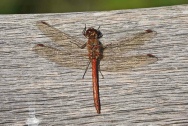
A number of butterflies and dragonflies were enjoying the sun (01 Sept) including Small Copper, Speckled Wood, Ruddy Darter and Willow Emerald. A notable movement of summer migrants occurred (02 Sept) and Mark recorded 38 Swifts hawking over the wooded area along with 8 Swallows and 2 House Martins. A Woodlark also passed over east and up to 12 Chiffchaff and 5 Blackcaps were present. A total of 11 Buzzards were also noted. A Lesser Whitethroat was present the following day (03 Sept). A juvenile Grass Snake was seen as was an early Ivy Bee and a micro-moth known as the Beet Moth (06 Sept). The Beet Moth was new to Norfolk in 2019 with only 11 records up to 2021 then in 2022 the species underwent a population explosion as over 4000 recordings were made. It appears to have moved from the restricted shingle coast where its food plant, Sea-beet grows to various cultivated forms of Beet throughout Norfolk. A Raven passed over south-eastwards while 37 Buzzards drifted east (09 Sept). Another movement of Swallows (16) and House Martins (48) plus one Swift occurred (12 Sept). Lake Pond Skaters, large migrant cousins of the Common Pond Skater were present on the Dew Pond. A Swift and 68 House Martins headed south (18 Sept) with a Firecrest and Red Kite noted the following day (19 Sept). The first Redwing of the autumn was recorded heading south (26 Sept) with 12 the following day (27 Sept), also seen was a Redstart, 2 Red Kites and a Brambling. The Redstart was still present (29 Sept) and the first returning Pink-footed Geese were noted with 167 heading west and 23 east. A Noctule Bat was also recorded. As the month ended a number of butterflies were still around including Red Admiral and Small Copper.
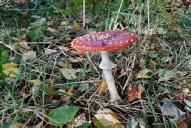
Storm Amy hit at the beginning of the month but did little damage to the Commons, however, it did bring some welcome rain. With more dampness a flurry of fungi appeared including many examples of the colourful Fly Agaric (05 Oct). Firecrest and Red Kite were a feature (06 Oct) plus 9 Buzzards seen overhead. Unusually a late Brimstone butterfly was noted and 8 Willow Emeralds were present on the main pond. A brief encounter with a lovely male Hen Harrier in the NE corner marsh occurred (07 Oct) along with 23 Pink-footed Geese heading west. Mark had a good day (08 Oct) with 3 Hawfinch west, a Redstart, a Firecrest, 7 Crossbill west, 17 Redwing, 7 Buzzards, 2 Siskin, 2 Grey Lag Geese east and 25 Linnets. The Redstart and Firecrest were still present (09 Oct) and a further 11 Crossbills headed southwest. A Peacock butterfly was noted (13 Oct) as well as a Common Snipe. A number of small birds were moving (14 Oct) including 9 Brambling west, 8 Siskin, 3 Lesser Redpoll, 6 Skylarks west, 16 Redwing and Fieldfare south plus nearly 470 Starlings west. The following day (15 Oct) Mark tracked a number of birds heading west including 76 Redwing, 171 Starling, 20 Siskin, 3 Lesser Redpoll and a Meadow Pipit. Also around the Common a Yellow-browed Warbler was present and 2 Stonechats. A couple of Fieldfare also headed south. Birds continued heading mainly west over the next few days such as 26 Brambling (16 Oct), 153 Siskin and 412 Redwing (17 Oct), 25 Crossbill, 4 Lapwing, 221 Siskin, 23 Lesser Redpoll, 7 Red Kite and 9 Wigeon (18 Oct). Other notable sightings included a Fox (16th Oct), Bearded Tit, Firecrest and Yellow-browed Warbler (17 Oct), Yellow-browed Warbler, Firecrest and 86 Fieldfare south (18 Oct). A Yellow-browed Warbler was still present (21 Oct) as were 2 Blackcaps. A Raven flew east (22 Oct) as did over 300 Pink-footed Geese and 8 Grey Lags. Also reported were a Mediterranean Gull, a Small White and Small Copper butterflies. During a walk for the North East Norfolk Bird Club (NENBC) a female Reed Bunting was seen (27 Oct). This was a former breeding species on the Common but in recent years has declined with this sighting the first for over a year. The species has declined 67% nationally since 1970, however, recent evidence suggests some population stability. Pete Geary reported a Red Kite east and 11 Redwing south (28 Oct) as well as a rare sighting of a Stoat.
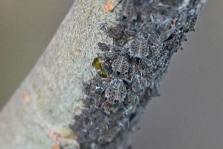
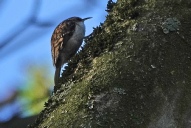
The steady westerly and southerly movement of birds continued with 20 Redwing south (01 Nov) and 2 Brambling west (04 Nov) being recorded. A Red Kite and 2 Mallard also passed over east. Some sunshine and a calm day tempted a Red Admiral and several Common Darters to bask in the warmth (05 Nov). Three Sparrowhawks were also present hunting over the Common. The following day (06 Nov) 2 Fieldfare headed east, a Woodcock came in from the north and landed in the wooded area, presumably it had just crossed the North Sea and 2 Snipe were in the central marsh. Over 1200 Starlings flew west in 21/2 hrs. A very large immigration of Blackbirds took place along the NE Norfolk coast (7 Nov) with 100+ noted over the Commons in 15 minutes. All were heading south with the largest group numbering around 40 birds. A Mediterranean Gull headed south, 24 Siskins were feeding on Alder seeds and a Red Kite flew east (13 Nov). The third named storm of the season, Storm Claudia rattled through (14 Nov) and brought down a few branches and some trees in the wet wood. A Woodcock was flushed from some Bracken (16 Nov) and 2 Mute Swans flew north (17 Nov). Towards the end of the month milder air flows were back and Song Thrushes could be heard in full song (24 Nov) and just as the sun set 1000’s of Pink-footed Geese headed west. The large skeins silhouetted in the fading light passed overhead in spectral waves of clamorous sound. Giant Willow Aphids were also seen again in their typical clusters on some willow stems. A Chiffchaff and Treecreeper were present (26 Nov) and a Water Rail was detected by Mark using a thermal imaging camera (28 Nov).
As autumn closed with a magnificent colour shift in the leaves there is as yet little hint of wintery weather in the forecast. A few minor frosts have occurred but in the main temperatures are mild.
Francis Farrow – Hon. Warden